Inside the Synchronization of Volatility Indexes Between Live Sports Props and Digital Reel Mechanics for Cross-Session Player Retention in Regulated Apps
Written by Viktor Simmons · Jun 7, 2026
Inside the Synchronization of Volatility Indexes Between Live Sports Props and Digital Reel Mechanics for Cross-Session Player Retention in Regulated Apps
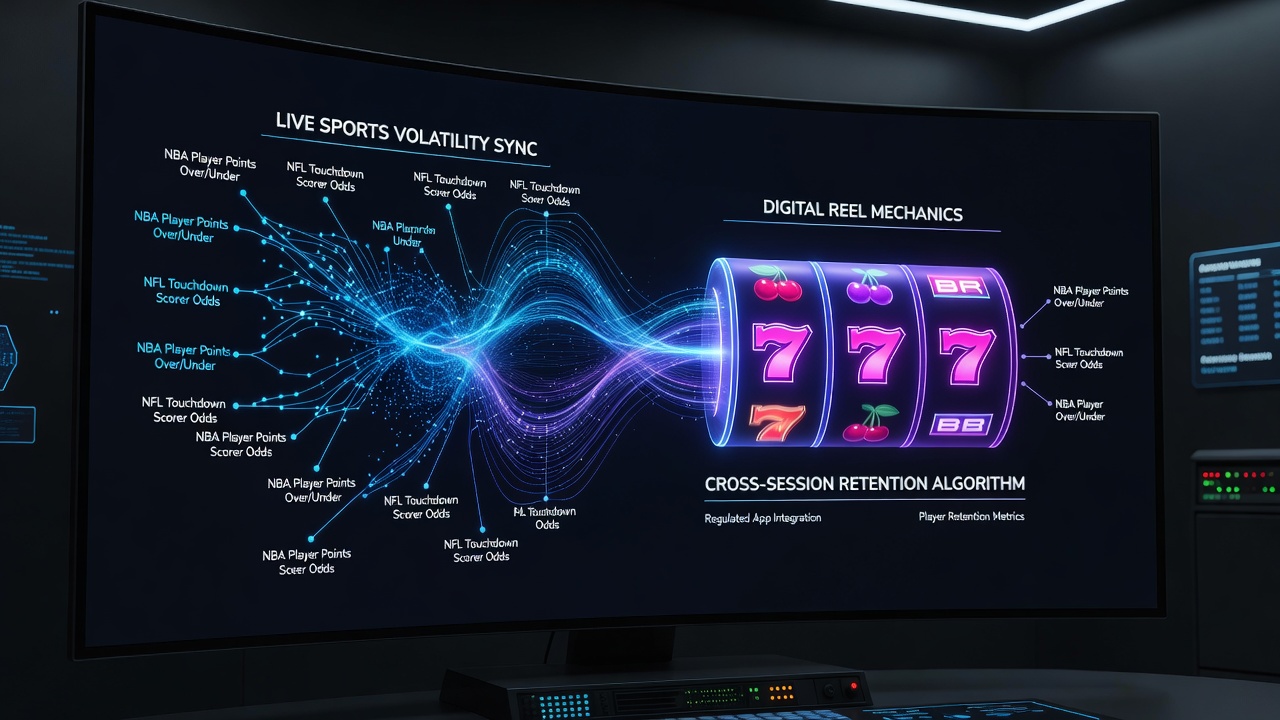
Regulated mobile apps now align volatility indexes across live sports props and digital reel sessions so that players encounter consistent risk profiles no matter which vertical they choose, and this alignment supports longer engagement windows within state-licensed environments. Volatility indexes measure payout frequency against reward size, and operators apply the same numeric scale to both prop bets on player performance statistics and reel outcomes that determine symbol combinations. When a user places a moderate-volatility prop on an NBA assist total, the app can route that player toward a reel game calibrated at a matching volatility level during the same login, which reduces abrupt shifts in expected session length.Defining Volatility Indexes Across Verticals
Live sports props calculate volatility through historical variance in individual player statistics, incorporating factors such as game pace, opponent defensive ratings, and recent form data, while digital reels use mathematical models that set hit rates for high-paying symbol clusters. Both systems convert these calculations into standardized index scores ranging from low to high, allowing backend engines to match offerings without exposing the underlying algorithms. Researchers at the University of Nevada, Las Vegas International Gaming Institute have documented how these shared indexes appear in production environments across multiple U.S. states.
Operators feed live event data into the same indexing framework that governs reel libraries, so a spike in volatility for a prop market during a late-game scenario can trigger an automatic adjustment that surfaces a comparable reel title once the sports session ends. This process runs on encrypted servers that log every transition for compliance audits required by state gaming commissions.
Technical Synchronization Methods
Application programming interfaces pull real-time statistical feeds from sports data providers and translate them into volatility adjustments that mirror reel parameters already stored in the gaming server. When a prop bet resolves at a higher variance than anticipated, the system flags the user's current index and queues a reel session whose volatility band falls within a narrow tolerance window. This matching occurs without user input, though players retain full control over whether they accept the suggested transition.

June 2026 brought updated technical standards in several jurisdictions that now require explicit disclosure of volatility index values on both sports and casino interfaces, ensuring users can review the numeric score before committing funds. These standards emerged after testing periods showed measurable differences in session duration when indexes remained unsynchronized.
Retention Patterns in Unified Ecosystems
Data collected from regulated platforms indicates that players who move between matched-volatility products complete additional deposit cycles within the same twenty-four-hour window compared with users who switch to unmatched offerings. The pattern holds across both iOS and Android deployments that operate under identical geofencing rules. Platform telemetry further reveals that cross-vertical transitions peak during evening hours when live sports events conclude and reel activity increases.
One documented implementation in a multi-state network adjusted reel volatility dynamically based on the outcome distribution of props from the prior hour, which produced a measurable uptick in return visits the following day. Regulators in those states review aggregated transition logs monthly to confirm that the synchronization logic does not create unintended inducements.
Regulatory Oversight and Compliance Requirements
State gaming control boards mandate that volatility synchronization algorithms undergo third-party testing before deployment, with particular attention to audit trails that track every index change triggered by live sports data. The American Gaming Association has published guidance on maintaining separation between promotional mechanics and core game mathematics even when indexes are shared. Canadian provincial regulators apply similar review processes that require documentation of how reel parameters respond to sports market fluctuations.
Operators must store index synchronization events for a minimum retention period defined by each jurisdiction, and independent testing labs verify that no single vertical receives preferential algorithmic weighting. These rules took effect progressively through 2025 and received further clarification in June 2026 when several states aligned their reporting formats.
Future Developments in Index Alignment
Industry reports indicate continued refinement of machine-learning models that predict optimal volatility handoffs based on historical user sequences rather than static thresholds. These models incorporate anonymized session data while remaining subject to the same audit requirements applied to current systems. Additional research from academic centers continues to examine how synchronized indexes interact with responsible gambling tools such as session timers and deposit limits.
Conclusion
Synchronization of volatility indexes between live sports props and digital reel mechanics operates through standardized scoring, real-time data translation, and mandatory compliance logging inside regulated apps. The approach supports measurable retention metrics while adhering to disclosure and testing rules that evolved through mid-2026. Observers continue to track how these technical alignments influence player behavior across expanding multi-state networks.